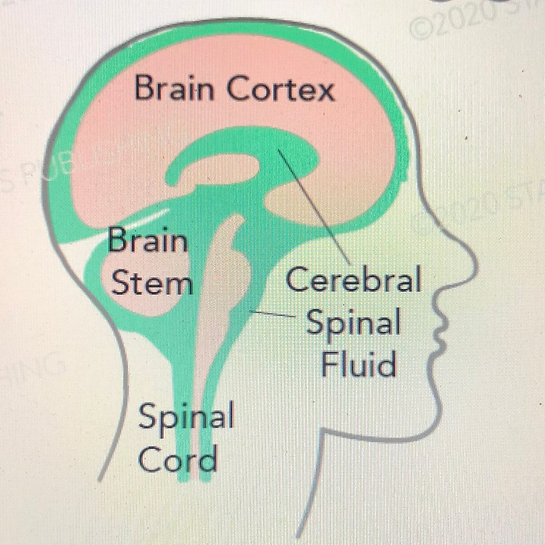
Rhythms form the foundation of biological life. From the steady beat of the heart to the natural cycles of respiration and sleep, these repeating patterns help regulate communication and balance throughout the body. CranioSacral Therapy (CST) focuses on one such rhythm—the CranioSacral Rhythm (CSR)—a subtle physiological motion distinct from both cardiac and respiratory cycles. For more than four decades, CST practitioners have palpated this rhythm as a guide to evaluate the body’s health and its ability to self-correct through gentle touch. Earlier research tools lacked the sensitivity to measure the small micromovements associated with the CSR, leading some to question whether this rhythm existed as a distinct physiological phenomenon. Today, modern technology has confirmed the presence of a measurable, low-frequency rhythm averaging 4–8 cycles per minute— separate from heart rate and breathing [1]. This discovery provides scientific support for what Dr. John E. Upledger and countless CST practitioners have observed through palpation. Dr. John E. Upledger and the Pressurestat Model The modern understanding of the CranioSacral Rhythm began with Dr. John E. Upledger. As we have all heard, during a surgical procedure in the 1970s, he noticed rhythmic movements of the spinal dura mater that could not be attributed to the patient’s breathing or heartbeat. Intrigued by this observation, he began years of study into the phenomenon and its potential physiological origins. Dr. Upledger proposed what became known as the Pressurestat Model to explain these rhythmic motions [5]. He theorized that cycles of cerebrospinal fluid (CSF) production and reabsorption created fluctuations in intracranial pressure, producing gentle expansion and contraction of the cranial structures. He further suggested that these rhythmic changes could be palpated throughout the body via the dural membranes and connective tissue system. Importantly, Dr. Upledger emphasized that his model was not meant to be final. He recognized that as research evolved, new scientific discoveries would provide greater clarity about the underlying mechanisms of the CranioSacral Rhythm. His visionary openness to ongoing investigation laid the groundwork for future collaboration between clinical practice and science. That willingness to evolve theory remains central to the Upledger Institute International’s philosophy today. Modern Research on the CranioSacral Rhythm In recent years, scientific studies have confirmed that the CranioSacral Rhythm is indeed a measurable physiological rhythm. A 2021 study by Rasmussen and Meulengracht identified a low-frequency oscillation distinct from both cardiac and respiratory activity [1]. Using highly sensitive instruments, they recorded rhythmic cranial motions averaging approximately 6 cycles per minute (range 4.25–7.07 cpm). The waveform pattern—consisting of flexion, a neutral zone, and extension—mirrored the phases described by Dr. Upledger and CST practitioners. The amplitude of this motion, around 58 micrometers, demonstrated that skilled palpation can reliably detect this subtle rhythm. Earlier research by Nelson, Sergueef, and Glonek also detected rhythmic oscillations in cerebral blood flow near this same frequency using laser-Doppler flowmetry [2,3,4]. Together, these findings confirm that the rhythm practitioners feel is not imaginary or coincidental—it reflects a genuine physiological process. 1 From Pressurestat Model to Pacemaker Theory Building on Dr. Upledger’s foundational insights, modern neuroscience has expanded our understanding of rhythmic activity in the body. The Pacemaker Theory, proposed by Thomas Rasmussen, PhD, MSc, CST-D, Upledger Institute International’s Director of Research, presents a contemporary explanation for the CranioSacral Rhythm. It aligns with Dr. Upledger’s vision by integrating clinical experience with current knowledge of neurophysiology. The Pacemaker Theory suggests that the CSR arises from specialized networks of oscillating neurons in the brainstem near the fourth ventricle, much like those that create cardiac and respiratory rhythms [6–8]. These neurons act as biological pacemakers, generating rhythmic electrical impulses that are independent of respiration and heart rate. Their output influences vascular tone and fluid dynamics through a process known as neurogenic vasomotion—the rhythmic contraction and relaxation of blood vessel walls driven by neural activity [11,12]. These neural rhythms are transmitted throughout the body via the Autonomic Nervous System (ANS) and coordinated by the Central Autonomic Network (CAN), which links the brainstem, hypothalamus, and higher cortical regions [11]. The CAN helps synchronize activity across multiple body systems, maintaining homeostasis and dynamic balance. Within this framework, the CSR can be seen as one of the body’s neurogenic rhythms—an expression of the brainstem’s pacemaking activity conveyed through vascular and connective tissue pathways. This understanding expands upon Dr. Upledger’s Pressurestat Model by offering a new perspective on cause and effect. The Pressurestat Model proposed that cerebrospinal fluid (CSF) production and reabsorption generated the rhythmic motion perceived in the CranioSacral System. At the time, this explanation reflected the scientific knowledge and measurement technology then available—direct observation of neural rhythmicity was not yet possible. Advances in neuroscience and imaging have since revealed that rhythmic neural activity within the brainstem can act as a biological pacemaker, producing oscillations that drive CSF movement rather than being driven by it. In this way, the Pacemaker Theory builds on Dr. Upledger’s foundational insight, providing a contemporary neurophysiological framework for the rhythm he so carefully described. 2 The Body’s Built-In Rhythms Human physiology depends on internal pacemakers that regulate rhythmic processes such as breathing, heartbeat, and digestion. These pacemakers are clusters of neurons that produce self-sustaining rhythms even without external stimuli [6–9]. Each rhythm maintains a baseline frequency yet remains flexible to respond to changing demands. When disrupted, these rhythms can affect multiple body systems and overall health [10]. The CranioSacral Rhythm may function similarly—as a low-frequency neurogenic rhythm contributing to homeostasis and balance. Variations in its quality or amplitude may reflect shifts in autonomic tone, stress responses, or tissue restriction. By gently engaging with this rhythm, CST practitioners work in concert with one of the body’s intrinsic regulatory systems. Integrating Science and Practice For Upledger alumni, the evolution from the Pressurestat Model to the Pacemaker Theory represents the continuity of Dr. Upledger’s vision: that future research would refine and expand understanding of the CranioSacral System. The emerging evidence for brainstem pacemakers and neurogenic vasomotion provides a plausible scientific context for what practitioners have long felt through their hands. Dr. Upledger taught that only about 5